 See customer reviews!

Intermittent Catheterization Instructions for Pediatric Males
Pediatric male catheterization is a technique used to help empty the bladder when a child cannot urinate or fully empty their bladder on their own. During pediatric intermittent catheterization, a flexible catheter is gently inserted through the urethra and into the bladder so urine can drain. The catheter is then removed after the bladder has been emptied.
This guide provides general information about supplies, preparation, and male intermittent catheterization instructions. Because every child’s needs are different, parents and caregivers should follow the catheterization technique and schedule provided by their child’s healthcare professional, as well as the instructions for the specific catheter being used.
Key Points
- Pediatric male catheterization can help empty the bladder when a child cannot urinate completely on their own.
- Pediatric intermittent catheterization involves inserting a catheter through the urethra to drain urine and then removing the catheter.
- Proper hand hygiene, preparation, positioning, and gentle male catheter insertion are important parts of the procedure.
- Never force a catheter if you encounter significant resistance or difficulty during insertion. Follow your child’s healthcare team’s instructions for what to do next.
- The frequency of pediatric catheterization varies by child and should be determined by their healthcare professional.
- As children become developmentally and physically ready, they may gradually participate in their own catheterization routine with guidance from their healthcare team.
What Is Pediatric Intermittent Catheterization?
Pediatric intermittent catheterization is a method of draining urine from the bladder at regular intervals using a flexible tube called an intermittent catheter. The catheter is inserted through the urethra into the bladder, allowing urine to flow out. Once the bladder has been emptied, the catheter is removed.
Unlike an indwelling catheter, which remains in place, an intermittent catheter is inserted when needed and removed after the bladder has drained. Pediatric urinary catheterization may be performed by a parent or caregiver, or by the child themselves when they are developmentally and physically able to participate in the process.
The type of catheter, technique, and catheterization schedule can vary depending on a child’s individual needs. Always follow the instructions provided by your child’s healthcare professional and the catheter manufacturer.
Why Might a Child Need Intermittent Catheterization?
A child may need intermittent catheterization when they have difficulty emptying their bladder completely. This can occur with conditions that affect bladder or nerve function, including neurogenic bladder and certain congenital or urological conditions.
Your child’s healthcare team will determine whether intermittent catheterization is appropriate and will provide instructions on how often it should be performed. The goal is to help empty the bladder according to the child’s individual treatment plan.
What Supplies Do You Need for Pediatric Male Catheterization?
Before beginning pediatric male catheterization, gather the supplies recommended by your child’s healthcare team. Depending on the catheter being used, you will need:
- A new intermittent catheter in its sealed package
- Water-soluble gel lubricant, if required for the catheter being used
- Handwashing supplies
- A clean washcloth or wipe, according to your child’s care instructions
- A toilet, urinal, collection container, or other appropriate device for collecting urine if your child is not positioned over a toilet
Some intermittent catheters are coated and may require preparation before insertion. Always follow the specific instructions provided with your catheter, as preparation can vary between products.
How to Catheterize a Male Child
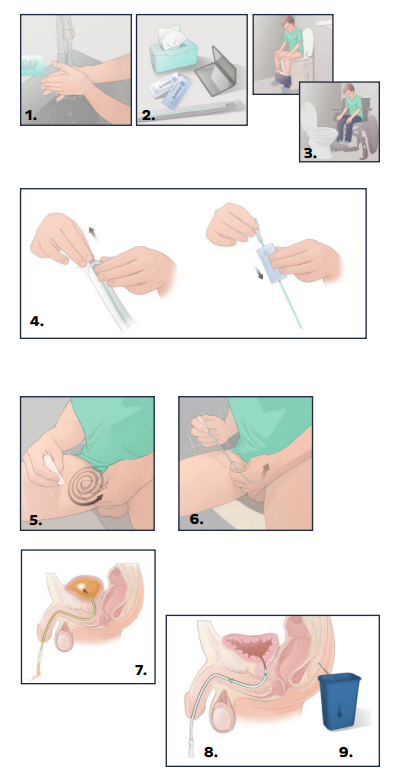
The following male intermittent catheterization instructions provide general educational guidance:
Step 1: Wash Your Hands and Prepare the Supplies
Thoroughly wash your hands with soap and water before beginning. Gather the catheter and other supplies so everything you need is within easy reach.
Step 2: Position Your Child Comfortably
Position your child in the way recommended by their healthcare team. Depending on their age, mobility, and level of independence, catheterization may be performed while the child is sitting on or near a toilet or in another comfortable position.
Step 3: Prepare the Catheter
Follow the manufacturer’s instructions for preparing the catheter.
If using a hydrophilic catheter that includes a water sachet, activate and prepare the catheter according to the instructions on the packaging, prior to opening the product.
If using a catheter that requires separate gel lubrication, apply the recommended water-soluble gel lubricant to the catheter according to the instructions provided by your healthcare professional and the catheter manufacturer.
Step 4: Clean the Penis and Urethral Opening
Using your non-dominant hand, gently hold the penis. If your child is uncircumcised, gently retract the foreskin as instructed by their healthcare professional.
Clean the tip of the penis and the urethral opening according to the hygiene instructions provided by your child’s care team.
Step 5: Gently Insert the Catheter
With your dominant hand, gently insert the catheter into the urethral opening. Continue inserting it carefully until urine begins to flow.
If your child is using a coude catheter, make sure the catheter is oriented according to the manufacturer’s instructions and the technique demonstrated by your healthcare professional.
Never force the catheter. If you encounter significant resistance or your child experiences substantial pain, stop and follow your healthcare team’s instructions.
Step 6: Allow the Bladder to Drain
Once urine begins to flow, hold the catheter in place and allow the bladder to drain. Follow your child’s individualized instructions regarding catheter positioning and when the bladder is considered adequately emptied.
Step 7: Slowly Remove the Catheter
When urine stops flowing, slowly remove the catheter according to the technique demonstrated by your child’s healthcare professional. If additional urine begins to drain during removal, pause and allow it to empty as instructed.
Step 8: Dispose of the Catheter as Directed
Intermittent catheters are designed for single-use. Dispose of used materials appropriately.
Step 9: Wash Your Hands
Wash your hands thoroughly after completing the procedure.
Click here to download.
What If the Catheter Won’t Go In?
If you experience difficulty with male catheter insertion, do not force the catheter. Significant resistance, pain, or bleeding should not be ignored.
Stop the procedure and follow the instructions provided by your child’s healthcare team. If you cannot insert the catheter or are unable to drain your child’s bladder, contact their healthcare professional for guidance.
What If Urine Isn’t Draining Through the Catheter?
If the catheter has been inserted but urine is not draining, check that you have followed the positioning and insertion instructions provided by your child’s healthcare team. Do not assume that the bladder is empty simply because urine is not flowing.
If urine still does not drain, or if your child develops significant discomfort, follow your healthcare team’s instructions for contacting them or seeking medical care.
How Often Should a Child Use an Intermittent Catheter?
The frequency of pediatric intermittent catheterization varies from child to child. Your child’s schedule may depend on their bladder function, medical condition, fluid intake, age, and individual treatment plan.
For this reason, there is no single catheterization schedule that is appropriate for every child. Follow the schedule provided by your child’s healthcare professional rather than relying on a general schedule found online.
Can Children Learn to Self-Catheterize?
Some children can gradually learn to participate in or perform their own pediatric male catheterization as they become developmentally and physically ready.
The transition toward independence should be individualized. Parents and caregivers can work with the child’s healthcare team to determine which parts of the procedure the child can safely manage and when additional assistance is needed.
Children may begin by helping gather supplies, learning the steps, or taking responsibility for individual parts of the routine before eventually performing the procedure independently, when appropriate.